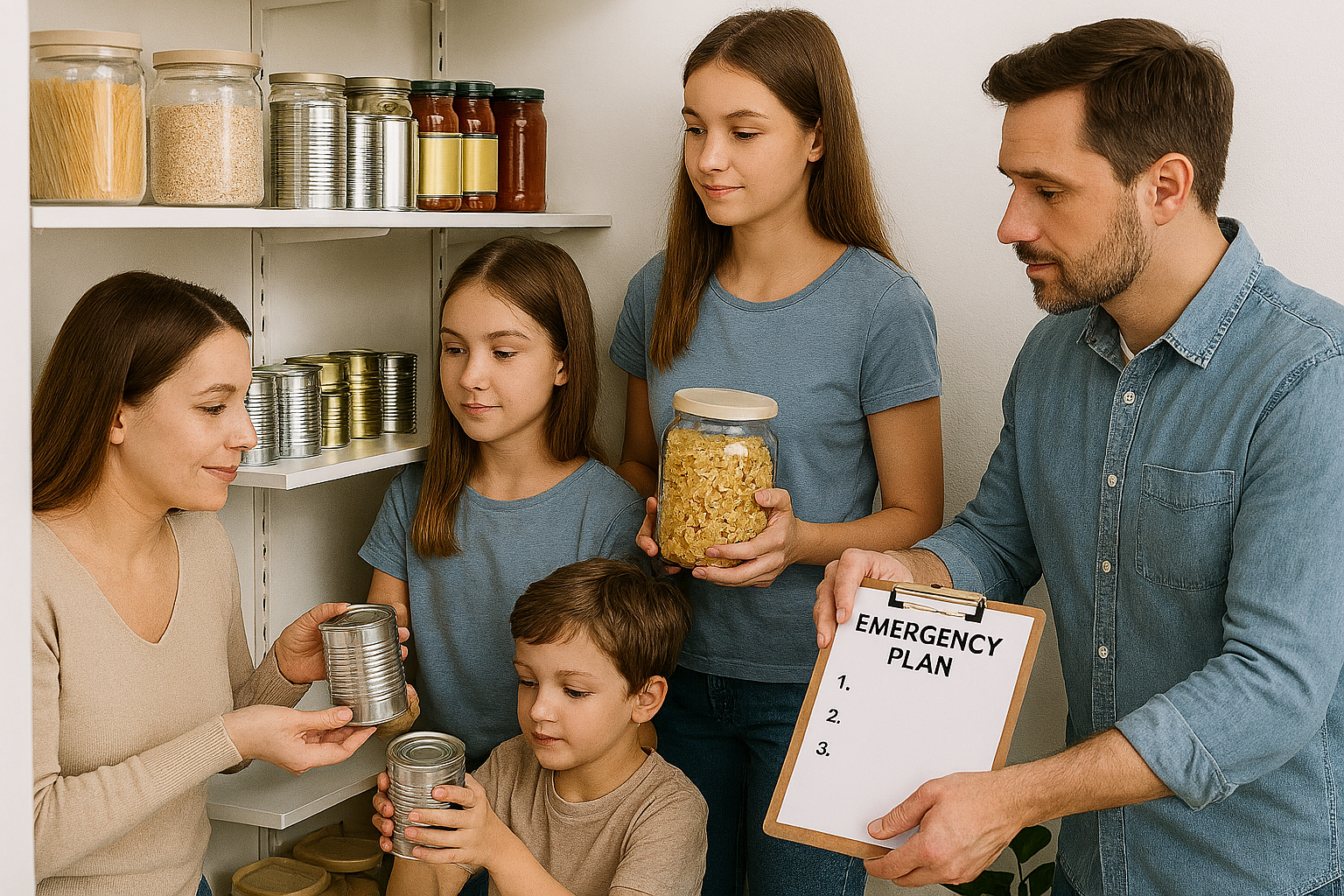
Emergency food storage does not have to be complicated, expensive, or extreme.
For most families, the goal is simple: have enough food on hand to get through short-term emergencies like power outages, severe weather, or temporary disruptions. You do not need specialty foods or large storage rooms to get started.
This beginner guide explains what foods to store, how much you need, and how to store them safely, using realistic, family-friendly steps.
If you haven’t already, start with our Family Emergency Kit Checklist to make sure the basics are covered.
What Is Emergency Food Storage?
Emergency food storage means keeping extra non-perishable food available so your family can eat normally during emergencies when stores may be closed or access is limited.
A beginner-friendly approach focuses on:
- Foods your family already eats
- Simple storage methods
- Short-term readiness (not long-term survival stockpiling)
How Much Emergency Food Does a Family Need?
A good starting goal for beginners is:
- 3 days of food per person
- Expand to 7 days when possible
For example:
- Family of 4 × 3 days = 12 person-days of food
This does not mean special meals. It means enough calories and nutrition to stay comfortable and energized.
Best Foods for Emergency Food Storage (Beginner-Friendly)
Choose foods that are:
- Shelf-stable
- Easy to prepare
- Familiar to your family
1. Canned Foods
- Canned vegetables
- Canned fruit
- Canned beans
- Canned soups and stews
Tip: Always include a manual can opener.
2. Dry Staples
- Rice
- Pasta
- Oats
- Cereal
Store in airtight containers if possible.
3. Ready-to-Eat Foods
- Peanut butter
- Granola or protein bars
- Crackers
- Trail mix
These are ideal if cooking is limited.
4. Comfort and Kid-Friendly Foods
- Shelf-stable snacks
- Juice boxes
- Easy meals kids recognize
Familiar foods help reduce stress during emergencies.
Water Is Just as Important as Food
Food storage always goes hand-in-hand with water storage.
Basic guideline:
- 1 gallon of water per person per day
- Store at least 3 days’ worth
Without water, many foods cannot be prepared safely.
Where to Store Emergency Food
Good storage locations include:
- Pantry
- Closet
- Under-bed storage bins
- Kitchen cabinets
Keep food:
- Cool
- Dry
- Away from direct sunlight
Label containers clearly so they are easy to access.
How to Rotate and Maintain Food Storage
To avoid waste:
- Store foods you already eat
- Rotate items every 6–12 months
- Check expiration dates twice a year
A simple system:
- Use older items first
- Replace them during regular grocery trips
This keeps your food storage fresh and affordable.
Emergency Food Storage on a Budget
You do not need to buy everything at once.
Beginner tips:
- Add 1–2 extra items per grocery trip
- Shop sales and store brands
- Focus on calories first, variety second
Consistency matters more than speed.
Special Considerations for Families
Think about:
- Food allergies
- Medical diets
- Baby formula or toddler foods
- Elderly family members
Make notes in your emergency plan so nothing is overlooked.
Combine Food Storage With a Family Emergency Plan
Food storage works best when paired with a plan.
If you haven’t already, read:
How to Create a Family Emergency Plan (Step-by-Step)
Together, food, water, and planning create a solid foundation.
Download the Free Family Emergency Kit Checklist
Our printable checklist helps you track:
- Food supplies
- Water storage
- Emergency essentials
Download the Free Family Emergency Kit Checklist
Related Guides
- Family Emergency Preparedness: A Beginner’s Guide
- Family Emergency Kit Checklist: Essential Supplies for Beginners
- How to Create a Family Emergency Plan (Step-by-Step)