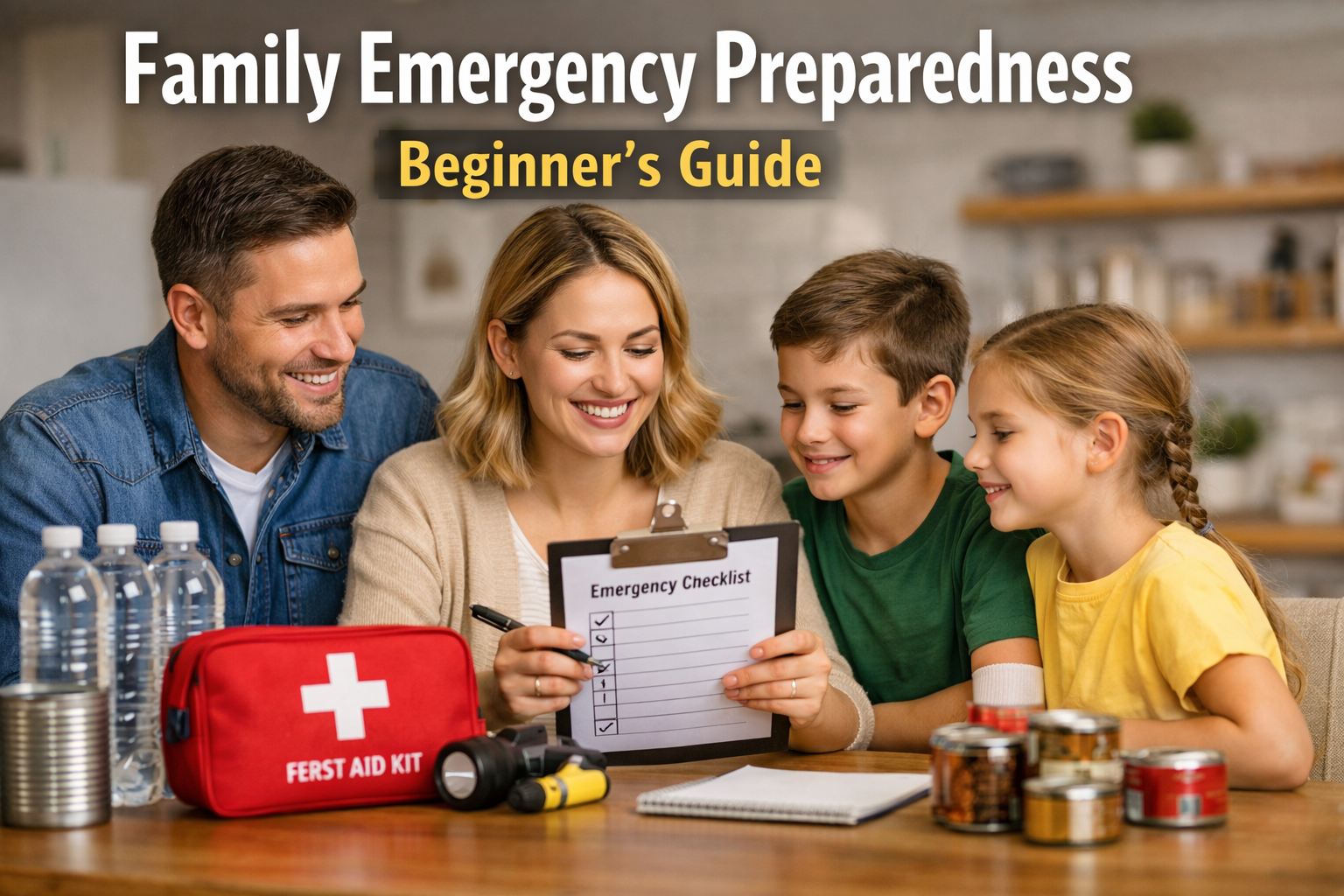
Family emergency preparedness does not require extreme survival skills, expensive gear, or drastic lifestyle changes. For most families, preparedness simply means having basic supplies, a simple plan, and clear communication so everyone knows what to do when something unexpected happens.
This guide is written specifically for beginners—parents and caregivers who want to protect their families without fear-based tactics or overwhelming information. By the end, you will understand exactly what to prepare, why it matters, and how to start today.
Make it easier to track your emergency kit. Download our free PDF checklist to print and follow step by step:
Download Free Family Emergency Kit Checklist
What Family Emergency Preparedness Really Means
Family emergency preparedness is the process of ensuring your household can safely manage common emergencies such as:
- Power outages
- Severe weather
- Water disruptions
- Evacuations
- Temporary loss of services
Preparedness focuses on short-term resilience, not long-term survival scenarios. The goal is to reduce stress, avoid panic, and meet basic needs until help or normal services return.
Why Families Need a Simple Plan (Not Extreme Prepping)
Families face unique challenges during emergencies:
- Children depend on adults for safety and reassurance
- Supplies must account for different ages and needs
- Stress levels increase faster in unfamiliar situations
A simple plan is more effective than an extreme one because it is:
- Easier to maintain
- Easier to explain to children
- More likely to be followed
Preparedness should support daily family life, not disrupt it.
The Most Common Emergencies Families Face
Most emergencies fall into a few predictable categories:
- Power outages (storms, grid failures)
- Weather events (heat waves, snowstorms, flooding)
- Water disruptions (boil notices, contamination)
- Temporary evacuations
- Medical or communication disruptions
Preparing for these scenarios covers the majority of real-world situations families encounter.
Family Emergency Preparedness Priorities (In Order)
1. Water
Water is the highest priority. Families should plan for one gallon per person per day for drinking and hygiene.
2. Food
Shelf-stable, familiar foods that require minimal preparation are best for families.
3. Shelter & Safety
Staying warm, cool, dry, and protected from hazards.
4. Communication
Knowing how to contact each other if normal methods fail.
5. Medical Needs
Medications, first aid supplies, and health information.
Emergency Preparedness by Living Situation
Apartments
- Limited storage space
- Shared utilities
- Emphasis on portable kits
Houses
- More storage options
- Backup power considerations
- Shelter-in-place planning
Renters
- Portable solutions
- No permanent modifications
- Focus on evacuation readiness
Preparedness should match your living situation, not fight against it.
How to Start Preparing in 7 Days
Day 1: Identify risks in your area
Day 2: Store emergency water
Day 3: Assemble a basic food supply
Day 4: Create a family emergency plan
Day 5: Build a 72-hour kit
Day 6: Review communication options
Day 7: Practice and adjust
Small steps create momentum.
Beginner Mistakes to Avoid
- Buying too much gear at once
- Ignoring children’s emotional needs
- Overcomplicating plans
- Forgetting to rotate supplies
- Not practicing the plan
Preparedness works best when it is simple and familiar.
Download Your Printable Checklist
Make it easier to track your emergency kit. Download our free PDF checklist to print and follow step by step:
Download Free Family Emergency Kit Checklist